
At the beginning of my journey into my ADL master’s program, I was required to read Carol Dweck’s book, Mindset: The New Psychology of Success. I am hesitant to admit that I first thought this was another self-help book to motivate me through this program. It was not as if I thought I did not need help or motivation, I desperately did. I also needed a mindset change.
I believe my fixed mindset dug its heels in when I was young, most likely during the middle school years. I became painfully aware, as I think we all do at that age, of my inadequacies. It was during this time when I realized I did not understand math the way the other kids did. I was a failure at math. Once I labeled myself as such, I carried that mindset with me right into high school. Rather than help me understand what I did not know, my freshman algebra teacher told me, “You are never going to pass my class.” Those eight words sparked a fire. I could do enough math to figure out what was required on the final exam to pass her class for the year, so I studied independently for a month with my only my math textbook and a calculator. Ultimately, I passed her class. But it took real grit to make that happen.
Looking back on my situation as a student, I am positive the teacher was not trying to instill a growth mindset in me or change me, but rather she was teaching from a fixed mindset. The fact that I was failing her class when she explicitly taught me the information was something she could not concern herself with. My failure was her failure.
Factors for a Growth Mindset
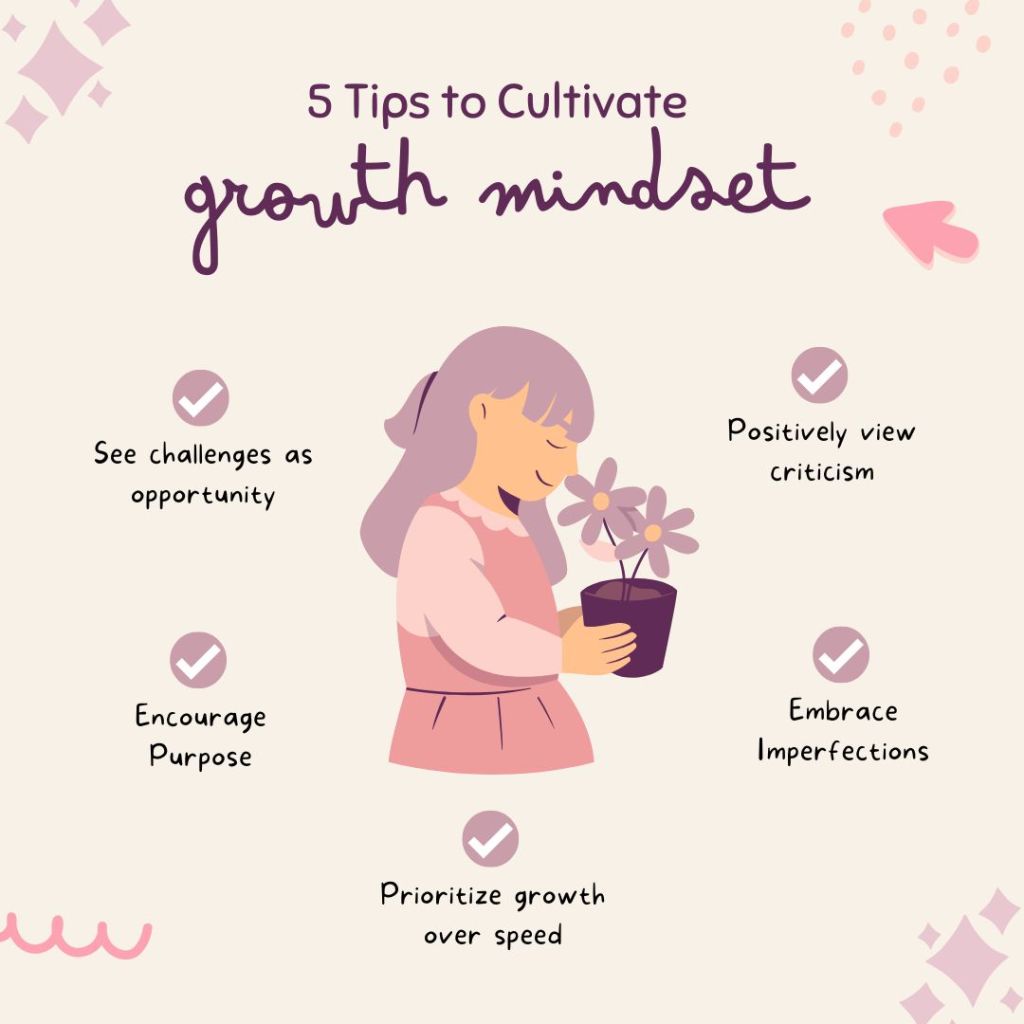
As an educator, I want to have an impact on the Growth Mindset in my classroom. I want my students to be successful in my classroom and in the real world around them. In one of my first courses for this program, I developed a Growth Mindset Plan. In my plan, I mentioned that I was piloting a new math program in my classroom. I started using the growth mindset with my students, who were struggling to grasp the new concepts and strategies I was teaching them. Since it is second grade, we used the power of yet as our mantra. Now, it is several months later and my students have all made progress. They are using mental math strategies, embracing new concepts and challenges, and look forward to the math lesson each day. Factors that had an effect on helping them develop a growth mindset was teaching them that it is okay to fail. Teaching them that learning is a lifelong process, and it is okay to need more time. I explained to them why the math lesson was important and relevant to their lives. I also shared with them my stories and experiences with math. I connected with them by sharing that I am a student again now, too, and I also have to tell myself that not understanding does not mean I cannot understand.
Acceptance and Attitudes

Failure is hard to accept. No one will ever say they love to fail. It is not in our human nature. We hate it. Negative feedback can shatter the will to keep going. With a growth mindset, learning to accept failure as something that makes us better leads to success. It drives us to fix what we need to work on so that we can be successful. Accepting negative feedback spurs us to make changes and to constantly improve. A fixed mindset can generate an attitude of quitting, jealousy, resentment, and even anger. An old saying comes to mind that my parents used to tell me. Quitters never win, and winners never quit. Teaching students to use the negative feedback and failure as a catalyst for success is key to helping them develop a growth mindset.
Grit, Grades and Rigor
Teaching students to accept negative feedback is not enough. Helping them to understand that grades do not define what they are capable of. Grades do not indicate a person’s intelligence. I think too often teachers focus on data to determine if a student is successful. There are many factors that contribute to student success and failure. As teachers, we should realize that students learn at different paces, in different ways, and have different needs and abilities. Giving students the opportunity to be assessed in ways that show success could greatly impact their development of a growth mindset. As well, teachers should realize that giving students something that is rigorous does not promote grit or the tenacity to work harder. A growth mindset leads to grit, and this in turn leads to more successful students.
Is it Enough?
Teaching the growth mindset is not enough. As educators, we have to adopt the growth mindset if we want our students to have one. Teaching with a fixed mindset leads us to the old sit-and-get teaching mentality. Fixed mindset teaching tells kids that if we teach it, they should get it and if they do not, it is their fault, not ours. Having a growth mindset shows our students that we are all learners, and we are all growing together.
Adopting a Growth Mindset
How can we teach our students to have a growth mindset? It is more than just putting up a poster about the power of yet and giving students positive affirmations. It is about providing them with opportunities to succeed. It is about creating significant learning environments where students have choice, ownership, and voice through authentic learning opportunities. Pairing the CSLE+COVA approach with the growth mindset gives students the ability to take ownership over their learning. It provides them with the power of transforming themselves into autodidactic learners. Through my innovation proposal I have created a plan to give students that opportunity by implementing blended learning through station rotations.
Fixed vs. Growth
One thing it is important to realize is that no one is completely of a growth mindset. We are all a combination of both. It is up to us to choose which mindset we live our lives with, but as educators, should we really be choosing a fixed mindset for our students? We should instill within them the power of believing they can do anything they set their minds to—even if it takes time.
References
Dweck, C. S. (2016). Mindset: The New Psychology of Success. Random House.
 Blended Elementary