What Once Was
Change. This one word can create chaos, disorder, and dissonance. It can also create inspiration, creativity, and success. As an educator for over 20 years, I began my teaching career in a technology-free classroom, unless I count the record player. Computers were only beginning to enter our homes, and the internet was not available for most, especially in rural America. Students had not yet experienced a tablet, Google, or the internet.
Fast forward fifteen years and classrooms look completely different. Students are immersed in video games, YouTube videos, social media, and the internet. Their mindset has been completely transformed into thinking that boredom should be nonexistent. They crave to have their minds stimulated every second of the day. Students ask me, “What do I do now?” more than ever. In the book, A New Culture of Learning, by Douglas Thomas and John Seely Brown, they describe the new culture of learning as one fundamental principle: “Students learn best when they are able to follow their passion and operate within the constraints of a bounded environment” (Thomas & Brown, 2011, Chapter 6, Inquiry Section, para. 3). We can allow this to happen when we create an environment in the classroom that fosters this principle.
Significant Learning Environments
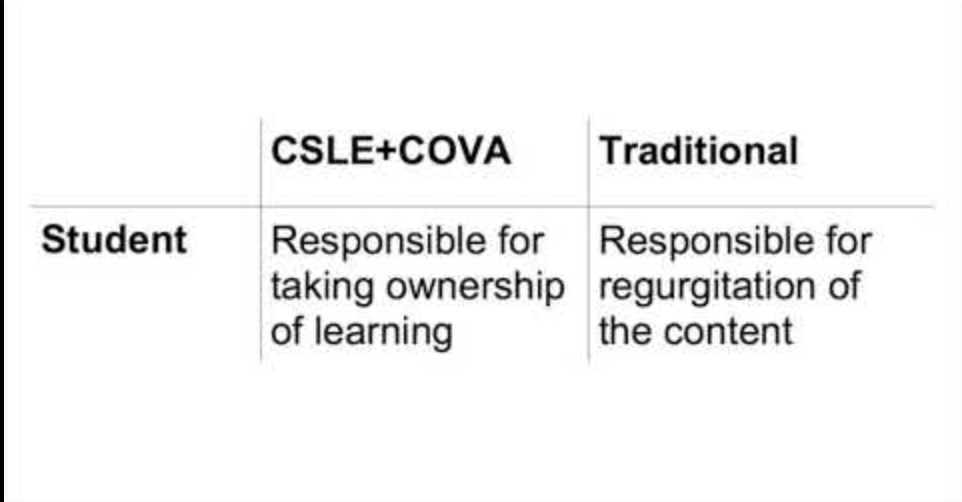
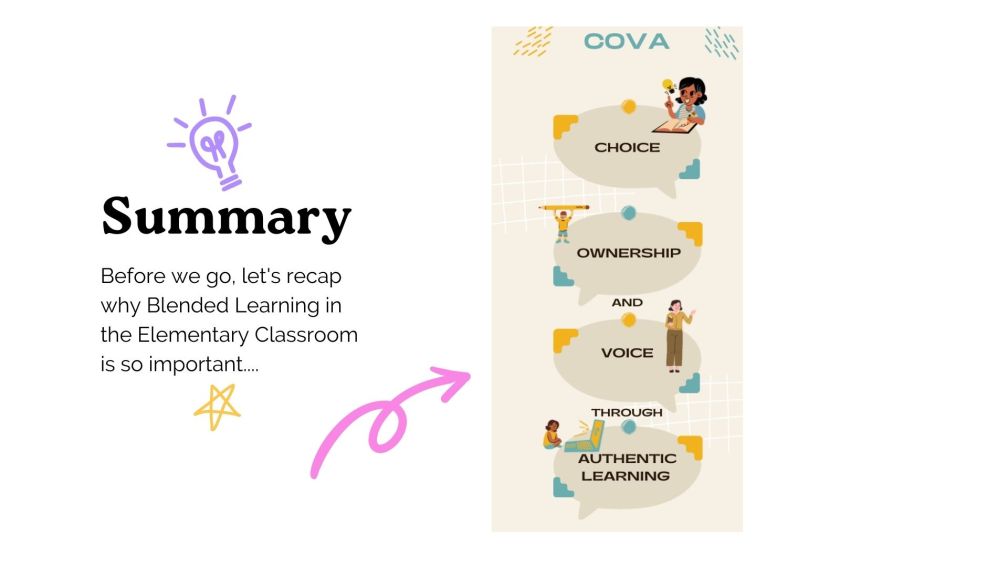
The old sit and get method of teaching where students listen to the teacher lecture, they take notes, study to pass a test so that they can prove they have learned content is an antiquated method of teaching. It is the way I remember school. Does it work? Yes, for some of our students, but are we really here to only teach some of our students? If we want to prepare students for their futures, we need to start thinking about how they learn in today’s technology-rich world. Through my course of study in my Applied Digital Learning program, Dr. Harapnuik states that creating significant learning environments for students, or the CSLE approach allows students to have choice, ownership, and voice through authentic learning opportunities–also known as COVA. This equips the student to learn how to learn. Teachers shift their focus from themselves and their ability to deliver the lesson to the learner, to being a learning facilitator where the focus is on creating a learning environment for the student to acquire knowledge while making meaningful connections (Harapnuik, n.d.).
Preparing for a Shift
As Katherine Cadwell states, students are programmed through our educational system to determine what we expect of them to complete an assignment so they can get a good grade. They have been trained to focus on the answers, not the questions. (TEDx Talks, 2018, 0:01:19) Cadwell continues to explain how she embraces the truth that to secondary students, their device is their most important possession. While some may argue that screen time is interfering with students’ learning, she embraces it by sitting back and allowing the students to do the research and ask the questions, while she is merely the facilitator of the learning. (TEDx Talks, 2018) By using the CSLE approach, technology is being integrated into classrooms so that what students are already using in their everyday social lives becomes a tool to accommodate their learning.
CSLE and COVA–making a difference
Teachers may wonder how integrating this approach will help them. What if it just means more work to do? What if this is just another “big idea” that will come and go and all the implementation was for nothing? These questions deserve acknowledgement. Creating a significant learning environment is not just another idea, it is the pedagogy we should follow to keep up with the new age of information. According to Thomas and Brown (2011), for most of the twentieth century explicit learning, that which does not change, was enough to sustain our educational practices. The twenty-first century belongs to the tacit. In the new digital world we live in, we learn by doing, watching and experimenting. We learn by making tacit connections, those that are implied without being taught. We do not have to be taught how to use a web browser, we just do it. As stated by Thomas and Brown (2011) the problem today is that the techniques and practices we have for understanding how students learn is about the explicit, the content, in a stable world. Now we are faced with developing new theories for addressing a world where the context is rapidly changing. By creating a significant learning environment for our students we can give them a choice, ownership and voice through authentic learning opportunities that will allow us to prepare them for the technology-rich world they are growing up in.
With 1:1 technology, I now have the opportunity to engage my elementary students in learning that keeps them interested, allows them to collaborate with their peers, and gives them the power to take ownership over what they have learned. In my Innovation Proposal, I have presented a plan for blended learning using a station rotation model. Station rotation is a model that elementary students are learning as early as Kindergarten through the implementation of their guided reading stations. In order to get teachers thinking holistically of the blended learning approach, incorporating a blended learning station will build on what teachers are already doing in their classrooms. As stated in the book, Blended, by Michael Horn and Heather Staker (2015), blended learning is the engine that can power personalized and competency-based learning. The station rotation will focus on the social studies curriculum using choice boards to help students guide their learning and create projects they choose. By creating this significant learning environment where students can use technology to learn about their country, their communities, and the world around them, teachers will begin to see their students’ creativity increase and their love for learning grow.
The Big Picture
To focus solely on implementing blended learning into the elementary classroom through station rotations is merely looking through the pinhole. This is one idea, one innovation that can help us take steps toward creating a learning environment that our students today and our students in the future will thrive in. We need to focus more on the learning and less on the technology itself. We need to embrace the new world we are living in and move away from using a standardized test to evaluate what our students are capable of. To reiterate what Thomas and Brown (2011) stated, students learn best when they are allowed to follow their passion with the constraints of boundaries. Giving students choice is not about allowing them to use technology at their free will. Even if we tell them to use the internet to learn about something they are passionate about, they will meander around without a clear path. A new culture of learning is about giving students the opportunity to ask the questions to the things they do not know and the freedom to find the answers.
Conclusion
In the new digital age we live in, children as young as two-years-old can pick up their parent’s cell phone, flip through icons, and within seconds enjoy their favorite video on YouTube. Our students are coming to our classrooms with more knowledge about technology than we expect them to have. How has this changed their quickly developing brains? How has this made a difference in the way kids learn? These are questions we may one day have statistical answers to. However, today’s data proves that standardized testing does not give us the big picture of what a student is capable of learning. A number does not define a child’s ability to learn. It is time for a new culture of learning and time to embrace innovative ideas and allow technology to have its place in the learning environment of today’s classroom so that we can prepare our students for their future.
References
Harapnuik, D. (n.d.). It’s About Learning: Learning Philosophy. https://www.harapnuik.org. Retrieved January 28, 2023, from https://www.harapnuik.org/?page_id=95
Horn, M. B., & Staker, H. (2015). Blended. Jossey-Bass.
TEDx Talks. (2018, April 26). Students need to lead the classroom, not teachers | Katherine Cadwell | TEDxStowe [Video]. YouTube. https://youtu.be/gzQhiB2EOVE
Thomas, D., & Brown, J. S. (2011). A New Culture of Learning (1st Edition) [Kindle]. CreateSpace Independent Publishing Platform.
Using Disruptive Innovation to Improve Schools | Michael Horn | Talks at Google. (2015, May 31). https://youtu.be/L5EdjW1rTH4?t=290. Retrieved January 28, 2023, from https://youtu.be/L5EdjW1rTH4?t=290
 Blended Elementary